
Quantity
Price
$32.00
100 available
This strength’s Certificate of Analysis isn’t published yet — add to cart will be enabled once the lab report is available.
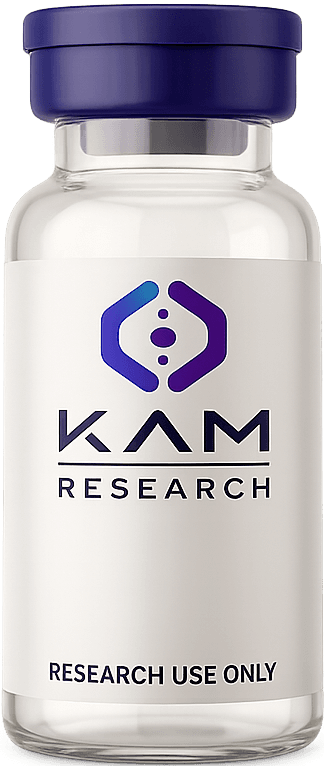
MOTS-C
From $32.00to $397.50
For laboratory research use only. Not for human or animal use, consumption, diagnosis, treatment, or disease prevention.
This item is available only through approved account access.
Product Specifications
- Lot Number
- —
- Purity
- —
- Storage Temp
- 36°F to 46°F
For Research Use Only. Not for human or animal administration. Not intended to diagnose, treat, cure, or prevent any disease. Sold for laboratory research purposes only.
Documentation
Certificates of Analysis are supplied with each product lot where applicable.
Certificate of Analysis (COA)
Documentation will be available once product lots are received and tested.
All products currently listed on this site are for research purposes only.
COA Library — 10mg
Published Certificates of Analysis for MOTS-C · 10mg. New deliveries are added as their batches are released.
No released COA for this strength yet
Reports appear here once a batch for this strength has been released.
Research Data
Chemical & Structural Identifiers
- Chemical Name (IUPAC)
- Mitochondrial Open Reading Frame of the 12S rRNA Type-c; 16-amino-acid mitochondrial-derived peptide (MDP) encoded within the mitochondrial genome.
- CAS Registry Number
- 1627580-64-6
- PubChem CID
- 137700200
- Molecular Formula
- C101H152N28O22S2
- Molecular Weight
- 2173.10 Da (2174.62 g/mol average)
- Sequence
- MRWQEMGYIFYPRKLR
- SMILES
- CC[C@H](C)[C@@H](C(=O)N[C@@H](CC1=CC=CC=C1)C(=O)N[C@@H](Cc2ccc(O)cc2)C(=O)N3CCC[C@H]3C(=O)N[C@@H](CCCNC(=N)N)C(=O)N[C@@H](CCCCN)C(=O)N[C@@H](CC(C)C)C(=O)N[C@@H](CCCNC(=N)N)C(=O)O)NC(=O)[C@H](CC4=CC=C(C=C4)O)NC(=O)CNC(=O)[C@H](CCSC)NC(=O)[C@H](CCC(=O)O)NC(=O)[C@H](CCC(=O)N)NC(=O)[C@H](Cc5c[nH]c6ccccc56)NC(=O)[C@H](CCCNC(=N)N)NC(=O)[C@H](CCSC)N
- InChIKey
- AQNZQZJSHGJWQO-ZEXUOBIOSA-N
- Salt / Counter-Ion
- Supplied as a high-purity lyophilized acetate (CH3COO-) or trifluoroacetate (CF3COO-) salt.
- Synonyms
- MOTS-c, MOTSc Peptide, Mitochondrial-derived peptide MOTS-c.
Analytical & COA Specifications
- Analytical Purity (RP-HPLC)
- ≥ 98.5% by area normalization under UV detection at λ = 214 nm and 280 nm (tyrosine and tryptophan chromophore detection).
- Identity Confirmation (ESI-MS / MALDI-TOF)
- Theoretical mass [M+H]+ = 2174.1 Da; observed mass-to-charge ratio m/z = 2174.1 ± 0.8 Da (with confirmed multivalent charge states: [M+2H]2+ = 1087.6 Da, [M+3H]3+ = 725.4 Da).
- Residual Moisture (Karl Fischer Titration)
- ≤ 3.0% water content.
- Endotoxin Screening (LAL Assay)
- < 1.0 EU/mg (Limulus Amebocyte Lysate per USP <85>).
- Sterility Validation
- USP <71> compliant (no observed microbial proliferation in liquid culture media).
- Physical Characterization
- Dense, white to off-white lyophilized solid cake/powder.
Handling & Stability
Storage. Store dry solid desiccated at -20°C to -80°C, protected from atmospheric moisture and direct light.
Solubility. Soluble in sterile laboratory-grade deionized water (≥ 10 mg/mL), sterile Phosphate-Buffered Saline (PBS, pH 7.4, ≥ 5 mg/mL), or dilute sterile 0.1% acetic acid for stock stabilization in in vitro assay applications.
- Handling & Methionine Oxidation Safeguards: Contains two methionine residues (Met1, Met6) and a tryptophan residue (Trp3) susceptible to oxidative degradation; avoid exposure to atmospheric oxygen and strong oxidants, prepare working solutions under inert nitrogen conditions when possible, and aliquot into single-use fractions at -20°C to eliminate degradation from repeated freeze-thaw cycles.
Mechanism & Literature
Biochemical Origin & Genomic Architecture: Encoded within the mitochondrial 12S ribosomal RNA (MT-RNR1) gene locus as a short open reading frame (sORF). MOTS-c functions as an autonomous endocrine/paracrine signaling molecule bridging mitochondrial energy states with nuclear gene transcription.
Cellular Pathways Investigated: Evaluated across in vitro skeletal muscle myotubes (C2C12), primary hepatocytes, and adipocyte cell lines:
References (3)
- Lee, C., et al. (2015). The mitochondrial-derived peptide MOTS-c promotes metabolic homeostasis and reduces diet-induced obesity. Cell Metabolism, 21(3), 443–454.
- Kim, K. H., et al. (2018). The mitochondrial-encoded peptide MOTS-c translocates to the nucleus to regulate nuclear gene expression in response to metabolic stress. Cell Metabolism, 28(3), 516–524.
- Reynolds, J. C., et al. (2021). MOTS-c is an exercise-induced mitochondrial-encoded regulator of age-dependent physical capacity and performance. Nature Communications, 12(1), 224.
Technical Laboratory FAQs
How is MOTS-c genetically encoded differently from standard nuclear-encoded peptides?
MOTS-c is a mitochondrial-derived peptide (MDP) translated from a short open reading frame located within the mitochondrial 12S rRNA gene, rather than from nuclear DNA transcription.
What is the biochemical mechanism of MOTS-c-induced AMPK activation in vitro?
MOTS-c disrupts folate metabolism and de novo purine biosynthesis, causing intracellular accumulation of the intermediate AICAR, which allosterically binds and promotes the phosphorylation of AMP-activated protein kinase (AMPK).
What solvent conditions are recommended for preparing in vitro MOTS-c stock assays?
Sterile deionized water or sterile PBS (pH 7.4) provides rapid dissolution at concentrations ≥ 5 mg/mL. Because MOTS-c contains multiple methionine residues, utilizing degassed buffers minimizes potential oxidation artifacts during downstream cell-based assays.
For Research Use Only. Not for human or animal administration. Not intended to diagnose, treat, cure, or prevent any disease. Sold for laboratory research purposes only.