
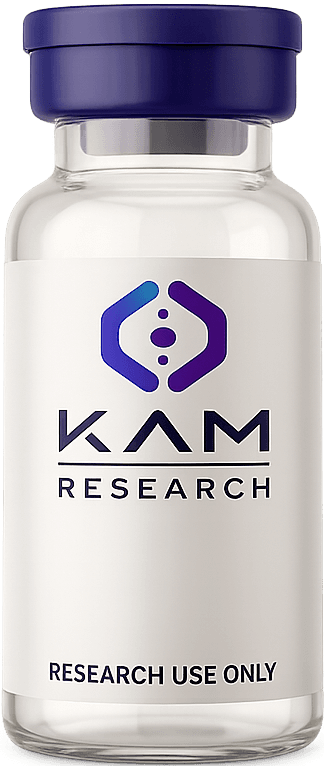
KPV
From $31.00to $787.50
For laboratory research use only. Not for human or animal use, consumption, diagnosis, treatment, or disease prevention.
This item is available only through approved account access.
Product Specifications
- Lot Number
- —
- Purity
- —
- Storage Temp
- 36°F to 46°F
For Research Use Only. Not for human or animal administration. Not intended to diagnose, treat, cure, or prevent any disease. Sold for laboratory research purposes only.
Documentation
Certificates of Analysis are supplied with each product lot where applicable.
Certificate of Analysis (COA)
Documentation will be available once product lots are received and tested.
All products currently listed on this site are for research purposes only.
COA Library
Published Certificates of Analysis for KPV. New deliveries are added as their batches are released.
No released COA for this strength yet
Reports appear here once a batch for this strength has been released.
Research Data
Chemical & Structural Identifiers
![2D chemical structure of (2S)-1-[(2S)-2,6-diaminohexanoyl]-N-[(2S)-1-hydroxy-3-methylbutan-2-yl]pyrrolidine-2-carboxamide (L-lysyl-L-prolyl-L-valine)](/structures/kpv.svg)
- Chemical Name (IUPAC)
- (2S)-1-[(2S)-2,6-diaminohexanoyl]-N-[(2S)-1-hydroxy-3-methylbutan-2-yl]pyrrolidine-2-carboxamide (L-lysyl-L-prolyl-L-valine)
- CAS Registry Number
- 67727-97-3
- PubChem CID
- 125564
- Molecular Formula
- C16H31N5O4
- Molecular Weight
- 357.24 Da (357.45 g/mol average)
- Sequence
- H-Lys-Pro-Val-OH (Single-letter: KPV)
- SMILES
- CC(C)[C@@H](C(=O)O)NC(=O)[C@@H]1CCCN1C(=O)[C@H](CCCCN)N
- InChIKey
- ODHQKDOEXFUXNQ-YWTDRTNVSA-N
- Salt / Counter-Ion
- Supplied as a high-purity lyophilized acetate (CH3COO-) or trifluoroacetate (CF3COO-) salt.
- Synonyms
- KPV, KPV Tripeptide, α-MSH(11--13), Lys-Pro-Val, ACTH(11-13)
Analytical & COA Specifications
- Analytical Purity (RP-HPLC)
- ≥ 98.5% by area normalization under UV detection at λ = 214 nm and 220 nm.
- Identity Confirmation (ESI-MS / MALDI-TOF)
- Theoretical mass [M+H]+ = 358.2 Da; observed mass-to-charge ratio m/z = 358.2 ± 0.4 Da.
- Residual Moisture (Karl Fischer Titration)
- ≤ 2.0% water content.
- Endotoxin Screening (LAL Assay)
- < 1.0 EU/mg (Limulus Amebocyte Lysate per USP <85>).
- Sterility Validation
- USP <71> compliant (no observed microbial proliferation in liquid culture media).
- Physical Characterization
- Dense, white to off-white lyophilized crystalline powder/cake.
Handling & Stability
Storage. Store dry solid desiccated at -20°C to -80°C, protected from atmospheric moisture and direct light.
Solubility. Highly hydrophilic; freely soluble in sterile laboratory-grade deionized water (≥ 25 mg/mL) and sterile Phosphate-Buffered Saline (PBS, pH 7.4, ≥ 20 mg/mL) for in vitro assay application.
- Membrane Transporter Specificity & Handling: Exhibits high aqueous stability; transported across cellular membranes via the oligopeptide transporter PepT1 (SLC15A1); prepare concentrated working stocks freshly or aliquot into single-use fractions at -20°C to eliminate degradation from repeated freeze-thaw cycles.
Mechanism & Literature
Biochemical Target & Classification: Synthetic linear tripeptide corresponding to the carboxy-terminal residues 11–13 of α-melanocyte-stimulating hormone (α-MSH). Exhibits zero melanotropic pigmentation activity (does not bind MC1R to stimulate melanogenesis) while retaining specific non-pigmentary cellular signaling pathways.
Cellular Pathways Investigated: Extensively documented in in vitro intestinal epithelial cell models (Caco-2, HT-29) and macrophage cultures (RAW 264.7) to evaluate PepT1-mediated cellular uptake, cytoplasmic interaction with downstream signaling proteins, inhibition of Nuclear Factor-κB (NF-κB) p65 nuclear translocation, suppression of IκBα phosphorylation, and downregulation of proinflammatory cytokine gene transcription (TNF-α, IL-1β, IL-6, IL-8).
References (3)
- Luger, T. A., et al. (2003). The C-terminal tripeptide of alpha-MSH (KPV) inhibits NF-kappaB activation in vitro. Annals of the New York Academy of Sciences, 994(1), 133–140.
- Dalmasso, G., et al. (2008). PepT1-mediated transport of the tripeptide KPV modulates cellular inflammatory signaling in intestinal epithelial cells in vitro. Gastroenterology, 134(1), 166–178.
- Land, S. C. (2012). Cellular mechanism of alpha-MSH and its C-terminal tripeptide KPV in cell culture and oxidative stress models. Peptides, 34(2), 405–412.
Technical Laboratory FAQs
What is the sequence and origin of the KPV tripeptide?
KPV is a synthetic tripeptide with the sequence Lys-Pro-Val, derived from the C-terminal sequence of α-melanocyte-stimulating hormone (α-MSH11--13), possessing selective signaling properties without inducing melanocortin-1 receptor (MC1R) melanogenic activation.
How does KPV cross cellular membranes in epithelial cell culture assays?
KPV is actively transported across epithelial cell membranes via the proton-coupled oligopeptide transporter 1 (PepT1 / SLC15A1), facilitating rapid intracellular accumulation in cell-based assays.
What solvent conditions are recommended for preparing in vitro KPV stock solutions?
Sterile deionized water or sterile PBS (pH 7.4) dissolves KPV rapidly at concentrations ≥ 20 mg/mL, creating a neutral delivery carrier suitable for cell culture and biochemical receptor assays.
For Research Use Only. Not for human or animal administration. Not intended to diagnose, treat, cure, or prevent any disease. Sold for laboratory research purposes only.