
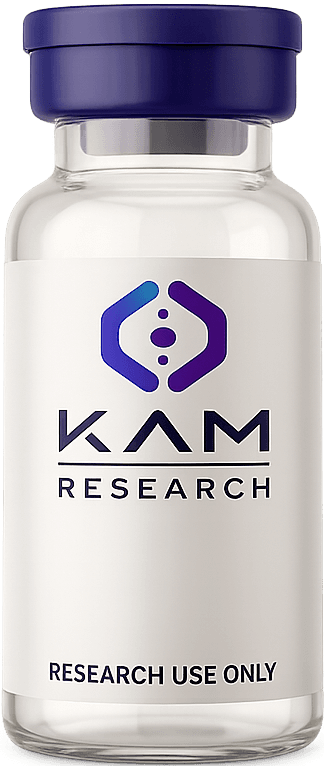
Quantity
Price
$55.00
100 available
This strength’s Certificate of Analysis isn’t published yet — add to cart will be enabled once the lab report is available.
GLOW
From $55.00to $412.50
For laboratory research use only. Not for human or animal use, consumption, diagnosis, treatment, or disease prevention.
This item is available only through approved account access.
Product Specifications
- Lot Number
- —
- Purity
- —
- Storage Temp
- 36°F to 46°F
For Research Use Only. Not for human or animal administration. Not intended to diagnose, treat, cure, or prevent any disease. Sold for laboratory research purposes only.
Documentation
Certificates of Analysis are supplied with each product lot where applicable.
Certificate of Analysis (COA)
Documentation will be available once product lots are received and tested.
All products currently listed on this site are for research purposes only.
COA Library
Published Certificates of Analysis for GLOW. New deliveries are added as their batches are released.
No released COA for this strength yet
Reports appear here once a batch for this strength has been released.
Research Data
Chemical & Structural Identifiers
- Formulation
- Multi-peptide co-lyophilized laboratory reference complex (Ternary research standard comprising Copper Tripeptide-1, Pentadecapeptide BPC-157, and Thymosin β4 active fragment TB-500).
- Salt / Counter-Ion
- Supplied as a co-lyophilized composite standard in stoichiometric proportion as stable acetate (CH3COO-) and cupric chelate salts.
Constituent Peptides
GHK-Cu
H-Gly-His-Lys-OH·Cu2+ · CAS: 49557-75-7 · Formula: C14H22CuN6O4 · MW: 401.91 g/mol
BPC-157
H-Gly-Glu-Pro-Pro-Pro-Gly-Lys-Pro-Ala-Asp-Asp-Ala-Gly-Leu-Val-OH · CAS: 137525-51-0 · Formula: C62H98N16O22 · MW: 1419.55 g/mol
TB-500 Fragment
Ac-Leu-Lys-Lys-Thr-Glu-Thr-Gln-OH (Ac-LKKTETQ) · CAS: 77591-33-4 / 885340-08-9 · Formula: C38H68N10O14 · MW: 889.01 g/mol
Analytical & COA Specifications
- Analytical Purity (RP-HPLC)
- Individual peptide purities ≥ 98.0% via baseline-resolved multi-peak gradient elution under UV detection at λ = 214 nm and 254 nm.
- GHK-Cu observed
- [M+H]+ = 402.1 ± 0.5 Da (with copper isotope envelope)
- BPC-157 observed
- [M+H]+ = 1419.6 ± 0.5 Da
- TB-500 observed
- [M+H]+ = 889.5 ± 0.5 Da
- Residual Moisture (Karl Fischer Titration)
- ≤ 3.0% composite water content.
- Endotoxin Screening (LAL Assay)
- < 1.0 EU/mg (Limulus Amebocyte Lysate per USP <85>).
- Sterility Validation
- USP <71> compliant (no microbial proliferation observed in thioglycollate/soybean-casein digest broths).
- Physical Characterization
- Distinctive light blue to cyan lyophilized cake/powder (imparted by the coordination geometry of the cupric chelate).
Handling & Stability
Storage. Store dry composite solid desiccated at -20°C to -80°C, sealed under an inert gas matrix and protected from light.
Solubility. Soluble in sterile laboratory-grade deionized water (≥ 15 mg/mL) and sterile Phosphate-Buffered Saline (PBS, pH 7.4, ≥ 10 mg/mL) for in vitro assay application.
- Handling & Buffer Selection: Maintain assay solutions at neutral pH (pH 6.8--7.4). *Do not* introduce strong metal chelators (e.g., EDTA, EGTA) or reducing agents (e.g., DTT, β-mercaptoethanol) into stock buffers, as they disrupt the copper-binding matrix or cleave the peptide assemblies. Aliquot into single-use fractions to eliminate freeze-thaw degradation cycles.
Mechanism & Literature
Biochemical Research Classification: Multi-pathway peptide complex formulated to model concurrent extracellular matrix (ECM) regulation, cytoskeletal restructuring, and focal adhesion dynamics in cell culture systems.
Cellular Pathways Investigated: Documented in in vitro fibroblasts, keratinocytes, and endothelial cell lines to assess multi-target cellular signaling:
References (3)
- Pickart, L., et al. (2018). GHK peptide as a natural modulator of multiple cellular pathways in gene expression profiling. Biomolecules, 8(4), 166.
- Chang, C. H., et al. (2011). Pentadecapeptide BPC 157 enhances FAK and paxillin phosphorylation in in-vitro cell migration assays. Biochemical and Biophysical Research Communications, 404(4), 1015–1020.
- Philp, D., et al. (2003). Thymosin beta 4 and its active peptide fragment promote dermal cell migration and matrix deposition in vitro. Journal of Cell Science, 116(15), 3229–3236.
Technical Laboratory FAQs
What constituent molecules form the GLOW peptide laboratory reference standard?
The GLOW standard is a defined multi-peptide complex consisting of Copper Tripeptide-1 (GHK-Cu), Pentadecapeptide BPC-157, and the active actin-binding fragment of Thymosin β4 (TB-500).
How are individual peptide components verified in a co-lyophilized GLOW sample?
Analytical verification is conducted using high-resolution reverse-phase HPLC (RP-HPLC) coupled to electrospray ionization mass spectrometry (ESI-MS), resolving three distinct retention peaks and mass-to-charge (m/z) signatures for GHK-Cu (402.1 Da), TB-500 (889.5 Da), and BPC-157 (1419.6 Da).
Why must EDTA and chelating reagents be omitted during GLOW blend reconstitution?
EDTA possesses a higher binding affinity for divalent copper than the GHK tripeptide backbone, leading to transchelation that strips Cu2+ from the peptide and alters the stability profile of the complex during in vitro assays.
For Research Use Only. Not for human or animal administration. Not intended to diagnose, treat, cure, or prevent any disease. Sold for laboratory research purposes only.