
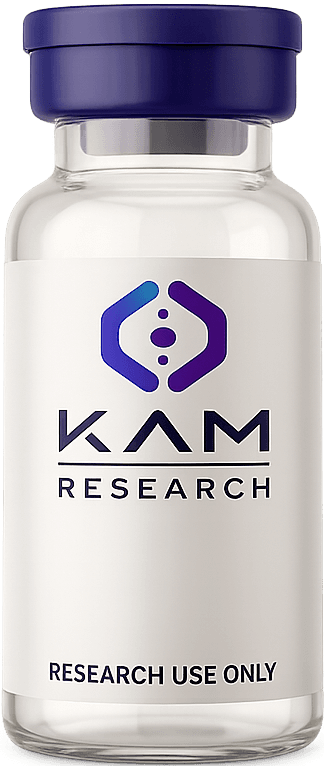
Epitalon
From $26.00to $435.00
For laboratory research use only. Not for human or animal use, consumption, diagnosis, treatment, or disease prevention.
This item is available only through approved account access.
Product Specifications
- Lot Number
- —
- Purity
- —
- Storage Temp
- 36°F to 46°F
For Research Use Only. Not for human or animal administration. Not intended to diagnose, treat, cure, or prevent any disease. Sold for laboratory research purposes only.
Documentation
Certificates of Analysis are supplied with each product lot where applicable.
Certificate of Analysis (COA)
Documentation will be available once product lots are received and tested.
All products currently listed on this site are for research purposes only.
COA Library
Published Certificates of Analysis for Epitalon. New deliveries are added as their batches are released.
No released COA for this strength yet
Reports appear here once a batch for this strength has been released.
Research Data
Chemical & Structural Identifiers
![2D chemical structure of L-alanyl-L-$\alpha$-glutamyl-L-$\alpha$-aspartylglycine ((2S)-2-[[(2S)-2-[[(2S)-2-aminopropanoyl]amino]-4-carboxybutanoyl]amino]-3-(carboxymethylcarbamoyl)propanoic acid)](/structures/epitalon.svg)
- Chemical Name (IUPAC)
- L-alanyl-L-α-glutamyl-L-α-aspartylglycine ((2S)-2-[[(2S)-2-[[(2S)-2-aminopropanoyl]amino]-4-carboxybutanoyl]amino]-3-(carboxymethylcarbamoyl)propanoic acid)
- CAS Registry Number
- 307297-39-8
- PubChem CID
- 219042
- Molecular Formula
- C14H22N4O9
- Molecular Weight
- 390.14 Da (390.35 g/mol average)
- Sequence
- H-Ala-Glu-Asp-Gly-OH (Single-letter: AEDG)
- SMILES
- C[C@@H](C(=O)N[C@@H](CCC(=O)O)C(=O)N[C@@H](CC(=O)O)C(=O)NCC(=O)O)N
- InChIKey
- OZXFPFPNLGIUFS-IMRODAPBSA-N
- Salt / Counter-Ion
- Supplied as a high-purity lyophilized acetate (CH3COO-) or trifluoroacetate (CF3COO-) salt.
- Synonyms
- Epitalon, Epithalon, Epithalone, AEDG Peptide, Ala-Glu-Asp-Gly, Pineal Bioregulator Synthetic Analog
Analytical & COA Specifications
- Analytical Purity (RP-HPLC)
- ≥ 98.5% area normalization under UV detection at λ = 214 nm and 220 nm.
- Identity Confirmation (ESI-MS / MALDI-TOF)
- Theoretical mass [M+H]+ = 391.1 Da; observed mass-to-charge ratio m/z = 391.1 ± 0.5 Da.
- Residual Moisture (Karl Fischer Titration)
- ≤ 2.0% water content.
- Endotoxin Screening (LAL Assay)
- < 1.0 EU/mg (Limulus Amebocyte Lysate per USP <85>).
- Sterility Validation
- USP <71> compliant (no observed microbial proliferation).
- Physical Characterization
- Dense, white to off-white lyophilized solid cake/powder.
Handling & Stability
Storage. Store dry solid desiccated at -20°C to -80°C, protected from atmospheric moisture and direct light.
Solubility. Highly hydrophilic; freely soluble in sterile laboratory-grade deionized water (≥ 20 mg/mL) and sterile Phosphate-Buffered Saline (PBS, pH 7.4, ≥ 15 mg/mL) for in vitro assay application.
- Handling & Aliquoting: Exhibits high aqueous chemical stability; prepare concentrated stock solutions freshly or aliquot into single-use fractions at -20°C to eliminate hydrolytic degradation from repeated freeze-thaw cycles.
Mechanism & Literature
Structural Origin & Classification: Synthetic tetrapeptide (Ala-Glu-Asp-Gly) developed as a defined sequence analogue of epithalamin, a natural pineal polypeptide complex investigated within the short peptide bioregulator framework.
Cellular Pathways Investigated: Documented in in vitro somatic cell models—such as human diploid fibroblasts (WI-38, MRC-5) and retinal pigment epithelial cells—to assess direct peptide-DNA binding interactions, transcriptional induction of the human telomerase reverse transcriptase catalytic subunit (hTERT), enzymatic activity via Telomeric Repeat Amplification Protocol (TRAP) assays, chromatin decondensation (deheterochromatinization), and modulation of senescence-associated β-galactosidase (SA-β-gal) expression.
References (3)
- Khavinson, V. K., et al. (2003). Epithalon peptide induces telomerase activity and telomere elongation in human somatic cells in vitro. Bulletin of Experimental Biology and Medicine, 135(6), 590–592.
- Khavinson, V. K., et al. (2020). Peptide regulation of gene expression and protein synthesis in cellular aging models. Current Pharmaceutical Design, 26(32), 3959–3971.
- Anisimov, V. N., et al. (2001). Dose-dependent effects of Epithalon on biomarker transcription in cell-free and in vitro systems. Neuro Endocrinology Letters, 22(6), 441–448.
Technical Laboratory FAQs
What is the sequence and structural classification of Epitalon?
Epitalon is a synthetic linear tetrapeptide with the primary sequence Ala-Glu-Asp-Gly (AEDG) and a monoisotopic molecular mass of 390.14 Da, categorized as a short-chain peptide bioregulator.
How is Epitalon evaluated in telomerase and epigenetic assays in vitro?
Preclinical literature examines Epitalon for its capacity to cross cellular membranes, interact with site-specific DNA promoter sequences, and stimulate hTERT gene expression in cultured somatic cells.
What solvent matrix is recommended for preparing in vitro Epitalon stock assays?
Sterile deionized water or sterile PBS (pH 7.4) provides immediate dissolution at concentrations exceeding 15 mg/mL, creating a neutral delivery carrier for cell culture and biochemical modeling.
For Research Use Only. Not for human or animal administration. Not intended to diagnose, treat, cure, or prevent any disease. Sold for laboratory research purposes only.