
Quantity
Price
$29.00
100 available
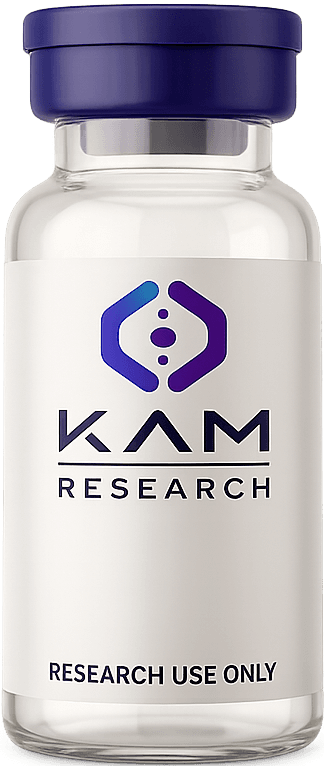
BPC-157
From $29.00to $787.50
For laboratory research use only. Not for human or animal use, consumption, diagnosis, treatment, or disease prevention.
Product Specifications
- Lot Number
- KRSBPC157-10-260814-01
- Purity
- 99.87%
- Storage Temp
- 36°F to 46°F
- Batch Status
- Released
- Retest Date
- Aug 22, 2026
For Research Use Only. Not for human or animal administration. Not intended to diagnose, treat, cure, or prevent any disease. Sold for laboratory research purposes only.
Documentation
Certificates of Analysis are supplied with each product lot where applicable.
Certificate of Analysis (COA)
Released- Lot Number
- KRSBPC157-10-260814-01
- Lab
- KMD Analytical
- Purity
- 99.87%
- Assay
- 10.01
- Tested
- Aug 23, 2026
- Expires
- Aug 22, 2026
Lab Report Available Online
All products currently listed on this site are for research purposes only.
COA Library — 10mg
Published Certificates of Analysis for BPC-157 · 10mg. New deliveries are added as their batches are released.
Lot KRSBPC157-10-260814-01
Tested Aug 23, 2026 · KMD Analytical · Purity 99.87% · Assay 10.01
Research Data
Chemical & Structural Identifiers
- Chemical Name (IUPAC)
- L-glycyl-L-α-glutamyl-L-prolyl-L-prolyl-L-prolylglycyl-L-lysyl-L-prolyl-L-alanyl-L-α-aspartyl-L-α-aspartyl-L-alanylglycyl-L-leucyl-L-valine
- CAS Registry Number
- 137525-51-0
- PubChem CID
- 9941957
- Molecular Formula
- C62H98N16O22
- Molecular Weight
- 1418.70 Da (1419.55 g/mol average)
- Sequence
- H-Gly-Glu-Pro-Pro-Pro-Gly-Lys-Pro-Ala-Asp-Asp-Ala-Gly-Leu-Val-OH (Single-letter: GEPPPGKPADDAGLV)
- SMILES
- CC(C)C[C@@H](C(=O)N[C@@H](C(C)C)C(=O)O)NC(=O)CNC(=O)[C@H](C)NC(=O)[C@H](CC(=O)O)NC(=O)[C@H](CC(=O)O)NC(=O)[C@H](C)NC(=O)[C@@H]1CCCN1C(=O)[C@H](CCCCN)NC(=O)CNC(=O)[C@@H]2CCCN2C(=O)[C@@H]3CCCN3C(=O)[C@@H]4CCCN4C(=O)[C@H](CCC(=O)O)NC(=O)CN
- InChIKey
- PCDQPRRSZKQHHS-XBHQNXJUSA-N
- Salt / Counter-Ion
- Supplied as a lyophilized acetate (CH3COO-) or trifluoroacetate (CF3COO-) salt.
- Synonyms
- BPC-157, Pentadecapeptide BPC 157, Body Protection Compound-157, PL 14736, PL-10
Analytical & COA Specifications
- Analytical Purity (RP-HPLC)
- ≥ 99.0% by area normalization under UV detection at λ = 214 nm and 220 nm.
- Identity Confirmation (ESI-MS / MALDI-TOF)
- Theoretical mass [M+H]+ = 1419.6 Da; observed mass-to-charge ratio m/z = 1419.6 ± 0.5 Da.
- Residual Moisture (Karl Fischer Titration)
- ≤ 2.0% water content.
- Endotoxin Screening (LAL Assay)
- < 1.0 EU/mg (Limulus Amebocyte Lysate per USP <85>).
- Sterility Validation
- USP <71> compliant (no microbial growth observed in thioglycollate/tryptic soy broths).
- Physical Characterization
- Dense, white to off-white lyophilized solid cake/powder.
Handling & Stability
Storage. Store dry lyophilized powder desiccated at -20°C to -80°C, protected from moisture and ambient light exposure.
Solubility. Freely soluble in sterile deionized water (≥ 25 mg/mL) and sterile Phosphate-Buffered Saline (PBS, pH 7.4, ≥ 15 mg/mL) for in vitro laboratory assay delivery.
- Handling & Degradation Parameters: Exhibits high structural stability in neutral aqueous solutions; avoid excessive aeration or high-shear vortexing to prevent mechanical denaturation, and aliquot into single-use fractions to eliminate freeze-thaw degradation cycles.
Mechanism & Literature
Structural Origin: Synthetic 15-amino acid peptide derived from a partial sequence isolated from endogenous human gastric juice protein. Engineered as a linear pentadecapeptide with a prominent tri-proline repeating segment (Pro3-Pro4-Pro5) conferring relative resistance to enzymatic hydrolysis in biochemical assay environments.
Cellular Pathways Investigated: Extensively profiled in in vitro cellular models (including human umbilical vein endothelial cells [HUVECs] and tendon-derived fibroblasts) to analyze modulation of the focal adhesion kinase (FAK)-paxillin phosphorylation axis, activation of Early Growth Response-1 (Egr-1), and downstream regulation of vascular endothelial growth factor receptor 2 (VEGFR2) transcription and collagen type I/III synthesis.
References (3)
- Sikiric, P., et al. (1993). A new gastric juice peptide, BPC. An overview of its biochemical characteristics in cellular models. Journal of Physiology (Paris), 87(5), 313–327.
- Chang, C. H., et al. (2011). Pentadecapeptide BPC 157 enhances FAK and paxillin phosphorylation in in-vitro cell migration assays. Biochemical and Biophysical Research Communications, 404(4), 1015–1020.
- Hsieh, P. C., et al. (2017). Biochemical evaluation of BPC-157-induced collagen synthesis and mRNA transcription in tendon fibroblast cultures. Journal of Cellular Physiology, 232(9), 2467–2477.
Technical Laboratory FAQs
What is the sequence origin and primary structure of BPC-157?
BPC-157 is a 15-amino acid synthetic peptide with the sequence Gly-Glu-Pro-Pro-Pro-Gly-Lys-Pro-Ala-Asp-Asp-Ala-Gly-Leu-Val, corresponding to a stable fragment derived from gastric juice protein.
Why does BPC-157 exhibit stability in diverse in vitro pH environments?
The peptide's conformation is stabilized by its contiguous tri-proline motif (Pro3-Pro4-Pro5), which creates a rigid polyproline II secondary structure that limits accessibility to non-specific laboratory endopeptidases.
What solvent conditions are standard for preparing in vitro BPC-157 stock assays?
Sterile deionized water or sterile PBS (pH 7.4) provides immediate dissolution at concentrations exceeding 15 mg/mL, providing a neutral carrier solution for cell culture and biochemical modeling.
For Research Use Only. Not for human or animal administration. Not intended to diagnose, treat, cure, or prevent any disease. Sold for laboratory research purposes only.