
Quantity
Price
$29.00
Out of stock
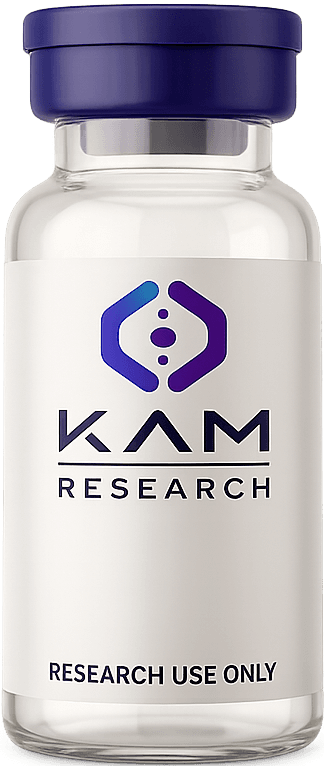
AOD-9604
From $29.00to $915.00
For laboratory research use only. Not for human or animal use, consumption, diagnosis, treatment, or disease prevention.
This item is available only through approved account access.
Product Specifications
- Lot Number
- —
- Purity
- —
- Storage Temp
- 36°F to 46°F
For Research Use Only. Not for human or animal administration. Not intended to diagnose, treat, cure, or prevent any disease. Sold for laboratory research purposes only.
Documentation
Certificates of Analysis are supplied with each product lot where applicable.
Certificate of Analysis (COA)
Documentation will be available once product lots are received and tested.
All products currently listed on this site are for research purposes only.
COA Library
Published Certificates of Analysis for AOD-9604. New deliveries are added as their batches are released.
No released COA for this strength yet
Reports appear here once a batch for this strength has been released.
Research Data
Chemical & Structural Identifiers
- Chemical Name (IUPAC)
- L-tyrosyl-L-leucyl-L-arginyl-L-isoleucyl-L-valyl-L-glutaminyl-L-cysteinyl-L-arginyl-L-seryl-L-valyl-L-glutamylglycyl-L-seryl-L-cysteinylglycyl-L-phenylalanine cyclic (7→ 14)-disulfide
- CAS Registry Number
- 221231-10-3 (also referenced under 300715-38-7)
- PubChem CID
- 16132442
- Molecular Formula
- C78H123N23O23S2
- Molecular Weight
- 1813.86 Da (1815.10 g/mol average)
- Sequence
- H-Tyr-Leu-Arg-Ile-Val-Gln-Cys-Arg-Ser-Val-Glu-Gly-Ser-Cys-Gly-Phe-OH (Disulfide bridge: Cys7-Cys14)
- SMILES
- CC[C@H](C)[C@H](NC(=O)[C@H](CCCNC(=N)N)NC(=O)[C@H](CC(C)C)NC(=O)[C@H](Cc1ccc(O)cc1)N)C(=O)N[C@@H](C(C)C)C(=O)N[C@@H](CCC(=O)N)C(=O)N[C@H]2CSSC[C@@H](NC(=O)CNC(=O)[C@H](CCC(=O)O)NC(=O)[C@@H](NC(=O)[C@H](CO)NC(=O)[C@H](CCCNC(=N)N)NC2=O)C(C)C)C(=O)NCC(=O)N[C@@H](Cc3ccccc3)C(=O)O
- InChIKey
- WZGWXQGOMKMGIZ-OGMMPVIESA-N
- Salt / Counter-Ion
- Supplied as a lyophilized acetate (CH3COO-) or trifluoroacetate (CF3COO-) salt.
- Synonyms
- AOD-9604, AOD9604, [Tyr0]-hGH (177-191), Lipolytic Fragment Analog
Analytical & COA Specifications
- Analytical Purity (RP-HPLC)
- ≥ 98.0% area normalization under UV detection at λ = 214 nm and 220 nm.
- Identity Confirmation (ESI-MS / MALDI-TOF)
- Theoretical mass [M+H]+ = 1816.1 Da; observed mass-to-charge ratio m/z = 1816.1 ± 0.5 Da.
- Residual Moisture (Karl Fischer Titration)
- ≤ 2.5% water content.
- Endotoxin Screening (LAL Assay)
- < 1.0 EU/mg (Limulus Amebocyte Lysate per USP <85>).
- Physical Characterization
- High-density, white to off-white lyophilized solid/cake.
Handling & Stability
Storage. Store dry lyophilized powder desiccated at -20°C to -80°C, strictly protected from atmospheric moisture and direct light.
Solubility. Soluble in sterile laboratory-grade deionized water (≥ 10 mg/mL), sterile Phosphate-Buffered Saline (PBS, pH 7.4), or dilute 0.1% acetic acid for stock stabilization in in vitro assay applications.
- Disulfide Integrity & Handling: Contains an intramolecular cyclic disulfide bond (Cys7-Cys14); exclude reducing agents (e.g., DTT, β-mercaptoethanol) from assay buffers to prevent conformational reduction, and avoid repeated freeze-thaw cycles once dissolved.
Mechanism & Literature
Structural Engineering Focus: Synthetic 16-amino acid peptide derived from the C-terminal domain of human growth hormone (hGH177--191) modified with an added N-terminal tyrosine residue (Tyr0) to stabilize tertiary structure and facilitate peptide iodination for laboratory tracking.
Cellular Pathways Investigated: Studied in cell culture assays (such as isolated murine 3T3-L1 adipocytes) for modulating in vitro lipolytic enzymatic activity and downregulating lipogenic enzyme transcription (e.g., acetyl-CoA carboxylase, glycerol-3-phosphate dehydrogenase) without exhibiting binding affinity for the growth hormone receptor (GHR) or altering cellular IGF-1 expression.
References (2)
- Ng, F. M., et al. (2000). Development of a synthetic peptide analog of the C-terminal domain of human growth hormone (AOD9604). Journal of Peptide Science, 6(S1), S158.
- Heffernan, M. A., et al. (2001). The effects of human GH and its lipolytic fragment (AOD9604) on lipid metabolism in cell-free and in vitro adipose tissue assays. Endocrinology, 142(12), 5182–5189.
Technical Laboratory FAQs
How does AOD-9604 differ structurally from native somatotropin (hGH)?
AOD-9604 is a truncated C-terminal fragment encompassing residues 177–191 of human growth hormone with an additional N-terminal tyrosine and a cyclic disulfide bridge between Cys7 and Cys14, lacking the somatogenic GHR-binding domain.
Why is the intramolecular disulfide bond critical in AOD-9604 research?
The Cys7-Cys14 cyclic disulfide bridge maintains the rigid loop configuration required for receptor interaction in cell-based assays; exposure to reducing agents linearizes the peptide and degrades assay reproducibility.
What solvent conditions are recommended for preparing in vitro AOD-9604 working stocks?
Sterile deionized water or sterile PBS (pH 7.4) is suitable for direct dilutions. For higher-concentration stock preparations, a dilute sterile 0.1% acetic acid vehicle provides enhanced peptide solubility prior to cell culture media integration.
For Research Use Only. Not for human or animal administration. Not intended to diagnose, treat, cure, or prevent any disease. Sold for laboratory research purposes only.