
Quantity
Price
$41.00
100 available
This strength’s Certificate of Analysis isn’t published yet — add to cart will be enabled once the lab report is available.
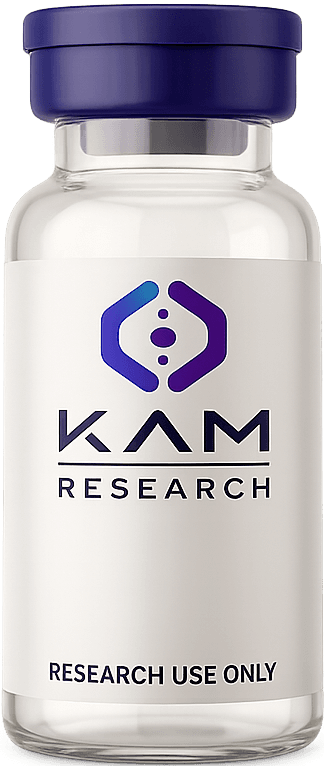
Glutathione
From $41.00to $307.50
For laboratory research use only. Not for human or animal use, consumption, diagnosis, treatment, or disease prevention.
This item is available only through approved account access.
Product Specifications
- Lot Number
- —
- Purity
- —
- Storage Temp
- 36°F to 46°F
For Research Use Only. Not for human or animal administration. Not intended to diagnose, treat, cure, or prevent any disease. Sold for laboratory research purposes only.
Documentation
Certificates of Analysis are supplied with each product lot where applicable.
Certificate of Analysis (COA)
Documentation will be available once product lots are received and tested.
All products currently listed on this site are for research purposes only.
COA Library
Published Certificates of Analysis for Glutathione. New deliveries are added as their batches are released.
No released COA for this strength yet
Reports appear here once a batch for this strength has been released.
Research Data
Chemical & Structural Identifiers
![2D chemical structure of (2S)-2-amino-5-[[(2R)-1-(carboxymethylamino)-1-oxo-3-sulfanylpropan-2-yl]amino]-5-oxopentanoic acid ($\gamma$-L-glutamyl-L-cysteinylglycine)](/structures/glutathione.svg)
- Chemical Name (IUPAC)
- (2S)-2-amino-5-[[(2R)-1-(carboxymethylamino)-1-oxo-3-sulfanylpropan-2-yl]amino]-5-oxopentanoic acid (γ-L-glutamyl-L-cysteinylglycine)
- CAS Registry Number
- 70-18-8 (Reduced monomer form; distinct from oxidized GSSG: 27025-41-8).
- PubChem CID
- 124886
- Molecular Formula
- C10H17N3O6S
- Molecular Weight
- 307.08 Da (307.32 g/mol average).
- Sequence
- H-γ-Glu-Cys-Gly-OH (Isopeptide γ-linkage between Glu and Cys; single-letter: ECG).
- SMILES
- C(CC(=O)N[C@@H](CS)C(=O)NCC(=O)O)[C@@H](C(=O)O)N
- InChIKey
- RWSXRVCMGQZWBV-WDSKDSINSA-N
- Salt / Counter-Ion
- Supplied as a high-purity crystalline free acid or lyophilized reduced zwitterionic solid.
- Synonyms
- Glutathione (reduced), GSH, L-Glutathione, γ-Glu-Cys-Gly, Glutinal.
Analytical & COA Specifications
- Analytical Purity (RP-HPLC)
- ≥ 98.5% by area normalization under UV detection at λ = 214 nm.
- Identity Confirmation (ESI-MS / 1H-NMR)
- Theoretical mass [M+H]+ = 308.1 Da; observed mass-to-charge ratio m/z = 308.1 ± 0.4 Da with confirmed thiol (-SH) proton resonance.
- Residual Moisture (Karl Fischer Titration)
- ≤ 1.5% water content.
- Endotoxin Screening (LAL Assay)
- < 1.0 EU/mg (Limulus Amebocyte Lysate per USP <85>).
- Sterility Validation
- USP <71> compliant (no microbial growth in nutrient media).
- Physical Characterization
- Pure white crystalline powder or lyophilized cake.
Handling & Stability
Storage. Store dry solid desiccated at -20°C to -80°C, protected from atmospheric moisture, ambient air, and direct light.
Solubility. Readily soluble in sterile deoxygenated deionized water (≥ 50 mg/mL) and sterile degassed Phosphate-Buffered Saline (PBS, pH 7.4, ≥ 30 mg/mL) for in vitro assay application.
- Thiol Autoxidation Safeguards: The active cysteinyl sulfhydryl (-SH) group spontaneously oxidizes to form glutathione disulfide (GSSG) in basic or aerated aqueous solutions; prepare assay stock solutions using degassed/nitrogen-sparged buffers, avoid exposure to trace transition metal catalysts (Fe3+, Cu2+), and aliquot into single-use fractions under inert gas at -80°C to eliminate freeze-thaw degradation.
Mechanism & Literature
Atypical Isopeptide Architecture: A non-ribosomal linear tripeptide synthesized enzymatically via glutamate-cysteine ligase (GCL) and glutathione synthetase (GS). The distinct γ-glutamyl linkage links the γ-carboxylate of glutamate to the amino group of cysteine, conferring enzymatic resistance to standard intracellular aminopeptidases and restricting hydrolysis to the membrane-bound enzyme γ-glutamyl transpeptidase (GGT).
Cellular Pathways Investigated: Evaluated across diverse in vitro cellular models (such as primary hepatocytes, cortical neurons, and endothelial cultures) to quantify intracellular redox buffer dynamics (the reduced-to-oxidized GSH:GSSG ratio), co-substrate kinetics with Glutathione Peroxidase (GPx) in lipid hydroperoxide reduction, enzymatic cycling via NADPH-dependent Glutathione Reductase (GR), and Phase II electrophilic metabolite conjugation via Glutathione S-Transferase (GST) isoforms.
References (3)
- Meister, A., & Anderson, M. E. (1983). Glutathione. Annual Review of Biochemistry, 52(1), 711–760.
- Forman, H. J., et al. (2009). Glutathione: overview of its protective roles, measurement, and biosynthesis in vitro. Molecular Aspects of Medicine, 30(1-2), 1–12.
- Lu, S. C. (2013). Glutathione synthesis in cell cultures and regulation of cellular redox signaling. Biochimica et Biophysica Acta (BBA) - General Subjects, 1830(5), 3143–3153.
Technical Laboratory FAQs
Why does Glutathione contain an atypical γ-glutamyl peptide bond?
The γ-carboxyl linkage prevents standard cellular endopeptidases and aminopeptidases from cleaving the N-terminal glutamate residue, rendering GSH stable inside cell assay systems until cleaved by specific γ-glutamyl transpeptidase (GGT) enzymes.
How do laboratory assays monitor the conversion between GSH and GSSG?
Assays utilize enzymatic recycling methods (DTNB/Ellman's reagent coupled with glutathione reductase) or RP-HPLC with electrochemical detection to quantify the concentration of free thiol monomer (GSH) relative to the disulfide dimer (GSSG).
What buffer conditions prevent autoxidation of reduced Glutathione in vitro?
Using deoxygenated, nitrogen-purged buffers at neutral to slightly acidic pH (pH 6.5--7.0) and adding low concentrations of a metal-chelating agent (such as EDTA) prevents transition-metal-catalyzed oxidation to GSSG.
For Research Use Only. Not for human or animal administration. Not intended to diagnose, treat, cure, or prevent any disease. Sold for laboratory research purposes only.