
Quantity
Price
$54.00
100 available
This strength’s Certificate of Analysis isn’t published yet — add to cart will be enabled once the lab report is available.
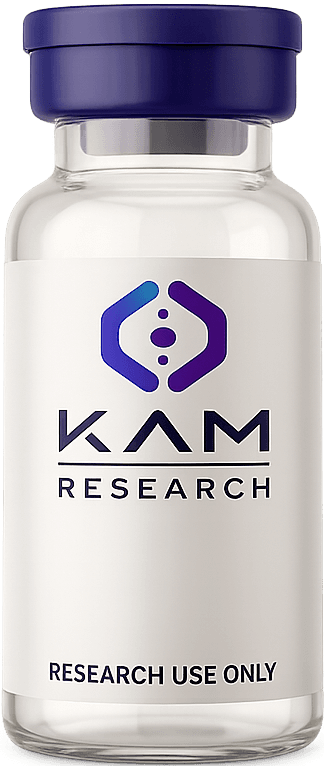
Aicar
From $54.00to $405.00
For laboratory research use only. Not for human or animal use, consumption, diagnosis, treatment, or disease prevention.
This item is available only through approved account access.
Product Specifications
- Lot Number
- —
- Purity
- —
- Storage Temp
- 36°F to 46°F
For Research Use Only. Not for human or animal administration. Not intended to diagnose, treat, cure, or prevent any disease. Sold for laboratory research purposes only.
Documentation
Certificates of Analysis are supplied with each product lot where applicable.
Certificate of Analysis (COA)
Documentation will be available once product lots are received and tested.
All products currently listed on this site are for research purposes only.
COA Library
Published Certificates of Analysis for Aicar. New deliveries are added as their batches are released.
No released COA for this strength yet
Reports appear here once a batch for this strength has been released.
Research Data
Chemical & Structural Identifiers
![2D chemical structure of 5-amino-1-[(2R,3R,4S,5R)-3,4-dihydroxy-5-(hydroxymethyl)oxolan-2-yl]imidazole-4-carboxamide](/structures/aicar.svg)
- Chemical Name (IUPAC)
- 5-amino-1-[(2R,3R,4S,5R)-3,4-dihydroxy-5-(hydroxymethyl)oxolan-2-yl]imidazole-4-carboxamide
- CAS Registry Number
- 2627-69-2
- PubChem CID
- 17513
- Molecular Formula
- C9H14N4O5
- Molecular Weight
- 258.10 g/mol (258.23 g/mol average)
- SMILES
- C1=NC(=C(N1[C@H]2[C@@H]([C@@H]([C@H](O2)CO)O)O)N)C(=O)N
- InChIKey
- AQZZVEKWNWVGPD-XVFCMESISA-N
- Salt / Counter-Ion
- Supplied as a high-purity crystalline free base solid.
- Synonyms
- AICAR, Acadesine, AICA Riboside, 5-Aminoimidazole-4-carboxamide-1-β-D-ribofuranoside
Analytical & COA Specifications
- Analytical Purity (RP-HPLC)
- ≥ 98.5% by area normalization at UV λ = 254 nm and 214 nm.
- Identity Confirmation (ESI-MS / 1H-NMR)
- Theoretical [M+H]+ = 259.1 Da; observed mass-to-charge ratio m/z = 259.1 ± 0.5 Da with confirmed proton NMR resonance shifts.
- Residual Moisture (Karl Fischer Titration)
- ≤ 1.0% water content.
- Endotoxin Screening (LAL Assay)
- < 1.0 EU/mg (Limulus Amebocyte Lysate per USP <85>).
- Physical Characterization
- Pure white to off-white crystalline solid/powder.
Handling & Stability
Storage. Store dry solid desiccated at -20°C to -80°C, protected from atmospheric moisture and direct light.
Solubility. Soluble in sterile laboratory-grade deionized water (≥ 20 mg/mL), Phosphate-Buffered Saline (PBS, pH 7.4, ≥ 15 mg/mL), and anhydrous DMSO (≥ 25 mg/mL) for in vitro assay delivery.
- Solution Stability: Prepare aqueous stock solutions freshly prior to cell assay application or store single-use aliquots at -20°C to prevent slow hydrolytic degradation; avoid repeated freeze-thaw cycles.
Mechanism & Literature
Membrane-permeable nucleoside precursor that undergoes intracellular phosphorylation by adenosine kinase to generate 5-aminoimidazole-4-carboxamide ribonucleotide (ZMP). ZMP acts as an intracellular AMP mimetic, allosterically activating AMP-activated protein kinase (AMPK) without altering the cellular ATP:ADP ratio.
Cellular Pathways Investigated: Extensively documented in in vitro cell cultures (e.g., C2C12 skeletal myotubes, HepG2 hepatocytes, and primary adipocytes) to monitor downstream enzymatic phosphorylation, specifically target phosphorylation of Acetyl-CoA Carboxylase (ACC at Ser79) and shifts in lipid/glycolytic pathway signaling.
References (2)
- Corton, J. M., et al. (1995). 5-aminoimidazole-4-carboxamide ribonucleoside: a specific method for activating AMP-activated protein kinase in intact cells. European Journal of Biochemistry, 229(2), 558–565.
- Hardie, D. G., et al. (2012). AMPK: a nutrient and energy sensor that maintains energy homeostasis. Nature Reviews Molecular Cell Biology, 13(4), 251–262.
Technical Laboratory FAQs
How does AICAR stimulate AMPK activation in cell culture models?
AICAR enters cells via nucleoside transporters and is phosphorylated by endogenous adenosine kinase to form ZMP, an AMP analogue that binds the γ-subunit of AMPK, promoting phosphorylation at Thr172 and preventing dephosphorylation.
Why is AICAR utilized as a nucleoside rather than its active phosphorylated form (ZMP)?
ZMP contains a charged phosphate group that cannot passively traverse the lipid bilayer of intact cell membranes; the uncharged riboside AICAR crosses the cell membrane freely before being converted intracellularly.
What solvent conditions are ideal for preparing in vitro AICAR stock solutions?
Sterile deionized water or sterile PBS (pH 7.4) is recommended for biological dilutions, while anhydrous DMSO provides a stable solvent matrix for concentrated laboratory stock preparations.
For Research Use Only. Not for human or animal administration. Not intended to diagnose, treat, cure, or prevent any disease. Sold for laboratory research purposes only.